
Power flow screening at any POI
Pick a substation and get injection headroom, contingency limits, and a cost estimate in minutes. A screening answer months before the utility's.
Updated October 2026
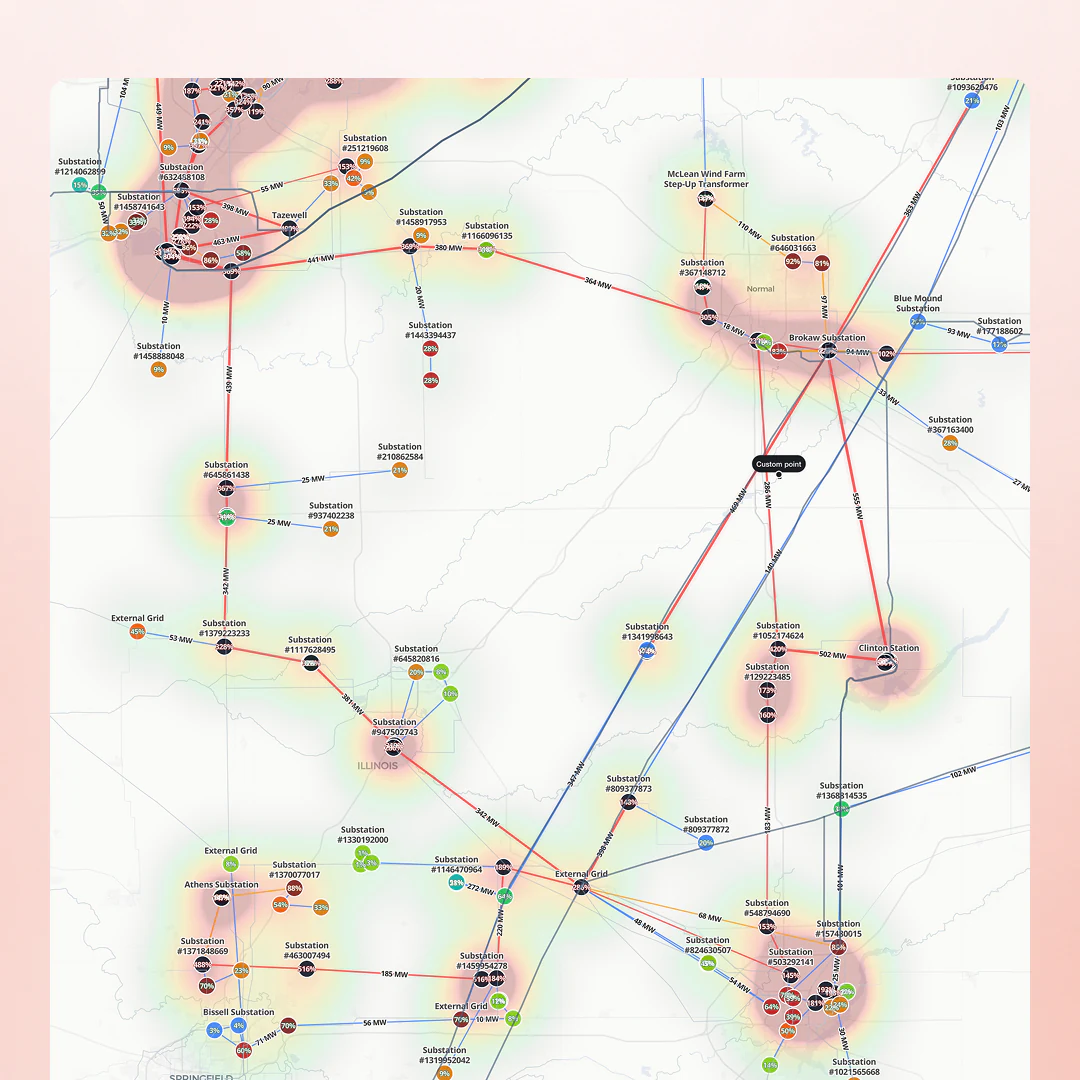
The study utilities make you wait for, screened up front
The grid workspace runs a DC power flow study on public transmission data at any point of interconnection: PTDF-based injection headroom, N-1 contingency screening, and an interconnection cost estimate, over a map of studied substations and line margins.
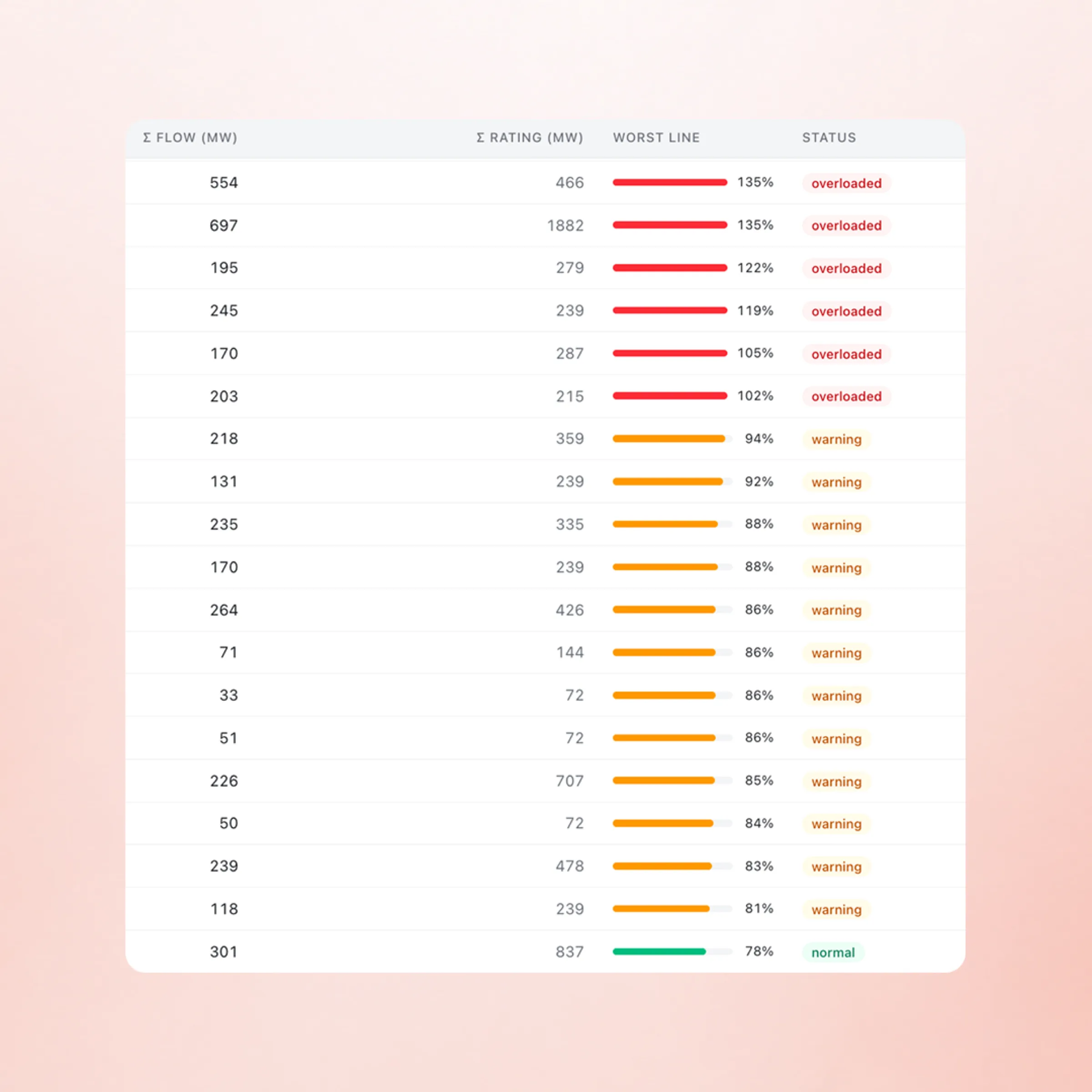
- Headroom by injection level, summer peak or other cases
- Binding constraints and the lines behind them
- Right-sizing: the MW where the picture changes
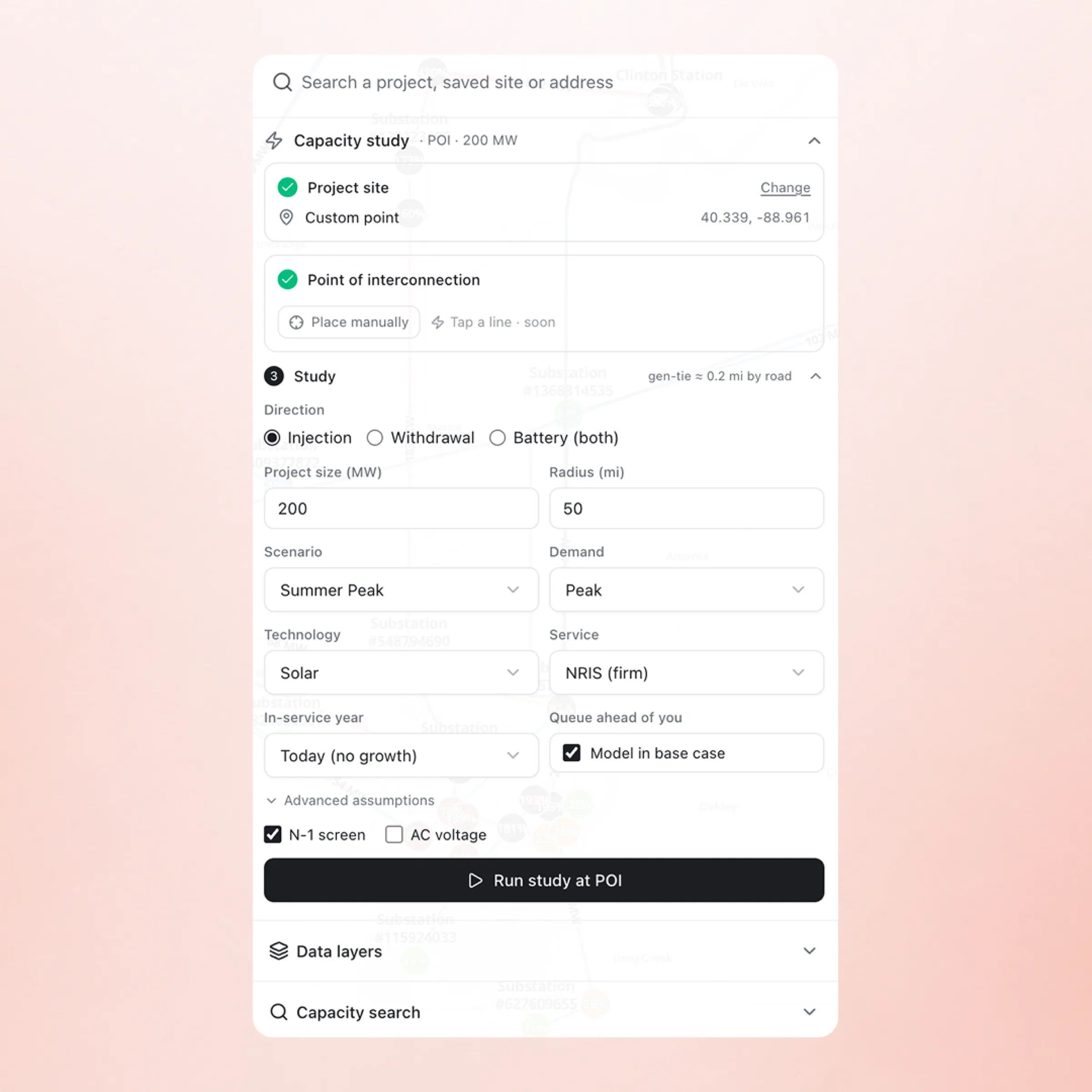
Set up a study the way you'd file it
Drop a project site, place the point of interconnection, and set the case: injection, withdrawal, or battery in both directions, project size, scenario and demand case, firm or energy-only service, and in-service year. Queue ahead of you can be modeled into the base case before you run.
- Solar, wind, storage, or load at any MW size
- N-1 screen on by default, AC voltage optional
- Gen-tie distance to the POI read off the map
Built for siting and filing decisions
Honest by design
Results are labeled as what they are: a screening estimate on public data, for deciding where to spend deposits, ahead of the formal study.
Connected to the queue
The same view carries queue positions, hosting capacity, and withdrawal patterns, so headroom reads in context.
Feeds the pre-application
Study results land in the pre-application package with the POI, voltage, and cost references.
Frequently asked questions
Is this a substitute for a utility interconnection study?
No. It is a screening tool on public transmission data that tells you which POIs justify deposits and which do not, before the formal process starts.
What method does the screening use?
A DC power flow with PTDF-based injection analysis and N-1 contingency screening at the chosen bus, with results by injection level.
Which regions can I study?
Studies run on public transmission data nationwide, alongside queue and hosting-capacity context for the region.
What do the results actually show?
Headroom at the POI by injection level, with the contingencies that bind first, so you can see what fails, at what megawatt level, and how much room a smaller ask would have.
How long does a run take?
Minutes. The point is to screen a dozen candidate POIs in an afternoon, not to open a consulting engagement per node.
Why DC power flow instead of AC?
DC linearization is the standard screening method: fast, stable, and transparent enough to explain. The utility's AC study remains the authority; this tells you which studies are worth paying for.
Run a study on your candidate POI
Name a substation at the demo and read the headroom off the screen.